Weekend Camping Guide: Checklist and Camp Cooking Ideas
Weekend camping has a special kind of charm: a short drive, a cooler in the trunk, and the promise of waking up to birds instead of alarms. Yet even a two-night escape can unravel when gear is missing, food is poorly planned, or the schedule asks too much of tired people. A thoughtful system keeps the trip light rather than stressful. With a strong checklist and a few smart meal ideas, a simple campsite can become a comfortable base for rest, hiking, conversation, and unhurried outdoor living.
Outline: The Five-Part Plan Behind an Easy Weekend Camp
Before you choose recipes, roll sleeping bags, or argue about who forgot the lantern last time, it helps to build a simple outline. A weekend trip is short enough to feel spontaneous, yet short trips are often less forgiving than longer ones. If you forget a stove on a seven-day holiday, you may have time to improvise or shop nearby. On a Friday-night-to-Sunday schedule, every mistake steals from the limited hours you hoped to spend relaxing. That is why a good outline is not busywork. It is the quiet frame that holds the whole trip together.
A practical outline for this article, and for your actual outing, looks like this:
• Choose the style of trip and the type of campsite.
• Build a camping checklist by category, not by memory.
• Plan meals around effort, storage, cleanup, and weather.
• Create a loose weekend schedule from departure to pack-out.
• Review comfort, safety, and the return-home routine.
This order matters. First, decide what kind of experience you want. Car camping at a developed campground is very different from a primitive site with no water, no toilets, and no picnic table. A couple seeking an easy reset after a workweek may want convenience and comfort. A group of friends might prefer a more rugged spot with fishing, trail access, and fewer neighbors. Families with children often benefit from restrooms, flat tent pads, and nearby activities because those details reduce friction almost immediately.
Next, think in comparisons rather than assumptions. Summer camping usually allows lighter sleeping bags, simpler clothing layers, and easier meal storage. Shoulder-season camping in spring or fall often demands warmer sleep systems, rain planning, and more attention to early darkness. Likewise, a campground with vehicle access supports heavier coolers, folding chairs, cast-iron cookware, and extra blankets. A walk-in site rewards restraint. In practical terms, most weekend campers handle about six main eating moments: Friday dinner, Saturday breakfast, lunch, and dinner, then Sunday breakfast and a final snack or lunch on the way home. That small number makes menu planning less intimidating than many beginners expect.
Think of the trip as a tiny house set down briefly on borrowed ground. The outline gives each item a job, each meal a purpose, and each hour a little breathing room. Once that structure is in place, the weekend feels less like logistics and more like the thing you wanted all along: fresh air, manageable effort, and a reset that actually feels restful.
Camping Checklist: What to Pack, What to Skip, and Why It Matters
A camping checklist works best when it is organized by function. People often forget essentials because they pack by object instead of by need. They think, “I packed the tent,” but forget the stakes, mallet, or rainfly. They remember the cooler and overlook the can opener, dish soap, or water jug. Grouping gear into categories reduces these blind spots and makes last-minute packing faster. It also helps you compare true necessities with comfort extras, which is useful if space in the car is limited.
A solid weekend checklist usually includes these core groups:
• Shelter: tent, footprint or tarp, stakes, guylines, mallet, repair tape.
• Sleep: sleeping bag, sleeping pad or air mattress, pillow, extra blanket.
• Clothing: base layers, warm layer, rain layer, socks, sleepwear, hat.
• Kitchen: stove or fire setup, fuel, lighter, cookware, utensils, plates, mugs, knife, cutting board, wash kit.
• Food and water: cooler, ice, drinking water, snacks, meal ingredients, coffee or tea.
• Camp setup: headlamp, lantern, chairs, table if needed, tarp, trash bags.
• Health and safety: first aid kit, medications, sunscreen, insect repellent, map, power bank, emergency contacts.
• Personal items: toiletries, towel, hand sanitizer, toilet paper, permits, ID, cash or park pass.
The difference between must-pack and nice-to-have items is worth understanding. A sleeping pad, for example, is not just about softness. It adds insulation from the cold ground, which can affect sleep quality more than many new campers realize. Likewise, headlamps are usually more practical than handheld flashlights because both hands stay free while cooking or setting up a tent. Water planning matters even more. Many campers underestimate consumption; for mild weather, several liters per person per day is a reasonable starting point, and more may be needed for hot conditions or active hiking. For coolers, food safety guidance generally recommends keeping perishables at 40 degrees Fahrenheit or 4 degrees Celsius or below, so good ice management is not just a convenience issue.
It also helps to compare gear choices honestly. A two-burner camp stove is easier for full meals than cooking over a fire, especially in wet weather or at campgrounds with burn restrictions. An air mattress may feel luxurious, but it can be bulky and vulnerable to punctures, while foam pads are simpler and more reliable. Cotton clothing feels comfortable in town, yet synthetic or wool layers usually perform better outdoors because they dry faster and handle changing temperatures more gracefully.
The smartest checklist is one you refine after every trip. Note what went untouched, what ran out too soon, and what would have made camp life easier. Over time, the list becomes less of a generic packing sheet and more of a personal operating system, shaped by your habits, your climate, and the kind of outdoors you actually enjoy.
Camp Cooking Ideas: Simple Meals That Taste Good and Travel Well
Camp cooking becomes easier when you stop trying to recreate a full home kitchen outdoors. The goal is not culinary theater. The goal is satisfying food with minimal prep, predictable cleanup, and ingredients that survive the ride to camp. That usually means choosing meals with overlapping components, sturdy produce, and flexible cooking methods. A weekend menu does not need ten separate ideas. In fact, fewer ingredients often lead to better results because they create less clutter on the table and less confusion after sunset.
A smart camp menu balances three things: storage, effort, and morale. Storage means understanding which foods need ice and which do not. Hard cheeses, tortillas, oats, pasta, rice, canned beans, peanut butter, nuts, dried fruit, and shelf-stable sauces are generally forgiving. Fresh berries, delicate greens, and raw meats need more careful handling. Effort matters because even enthusiastic campers are rarely excited about a sink full of pans in the dark. Morale matters because a good meal changes the emotional weather of a campsite. A warm breakfast on a cool morning can turn sleepy silence into real contentment.
Here is a practical weekend cooking framework:
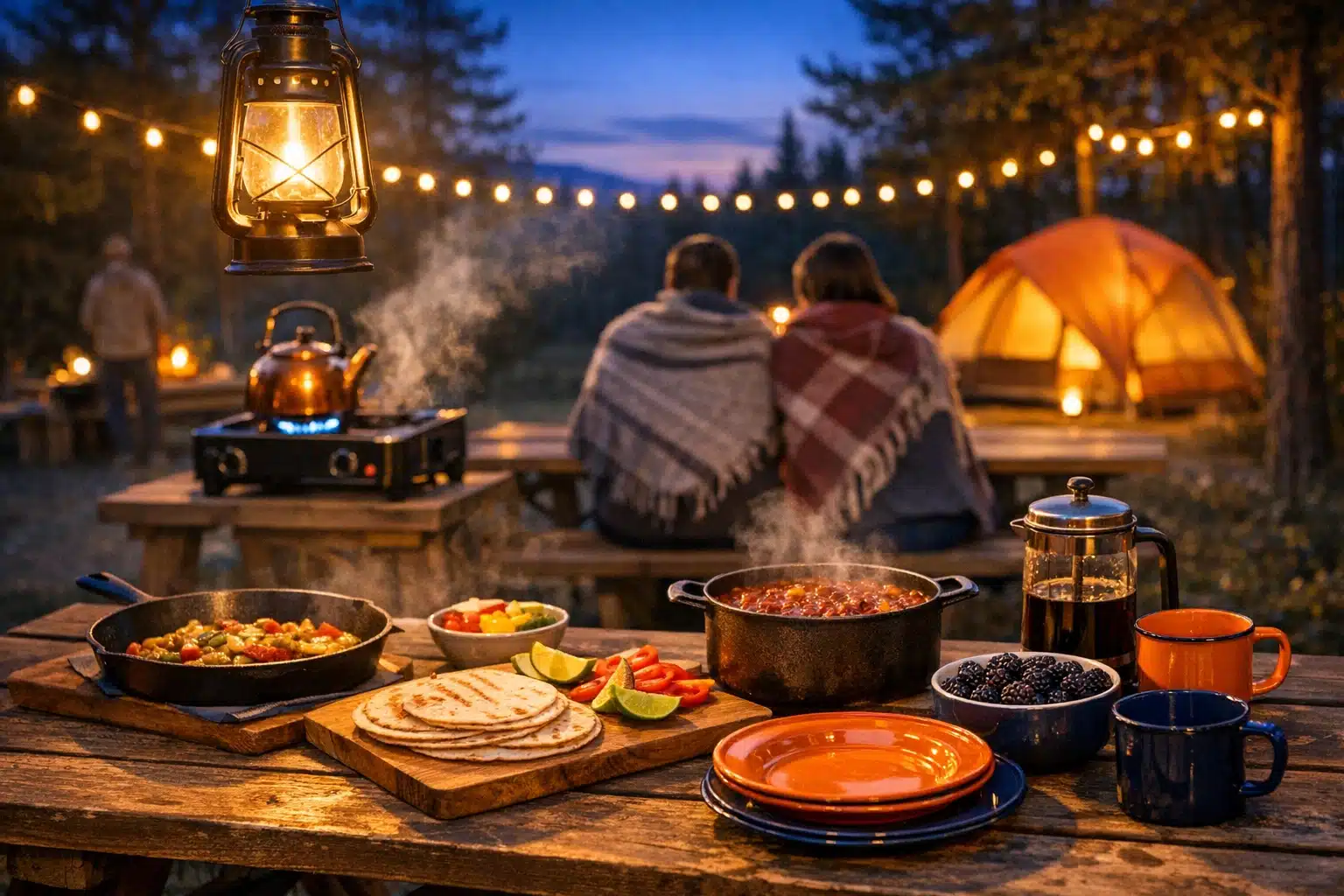
• Friday dinner: keep it fast. Try foil-packet vegetables with pre-cooked sausage, black bean quesadillas, or pasta cooked at home and reheated in a skillet.
• Saturday breakfast: overnight oats, breakfast burritos assembled ahead of time, or scrambled eggs with toast on a stove.
• Saturday lunch: wraps, pasta salad, hummus with pita, or sandwiches that travel well on a hike.
• Saturday dinner: chili, rice bowls with grilled vegetables, campfire potatoes, or kebabs prepped at home.
• Sunday breakfast: yogurt and granola, instant oatmeal with fruit, or bagels with nut butter and coffee.
• Snacks: trail mix, apples, jerky, crackers, popcorn, and dark chocolate.
Comparing cooking methods helps too. A camp stove offers control, speed, and consistency. You can boil water quickly, cook in wind with some shelter, and make coffee without waiting for coals. A campfire brings atmosphere and flavor, but it is slower, weather-dependent, and sometimes restricted by local rules. The best solution for many weekend campers is a hybrid approach: depend on the stove, enjoy the fire when conditions allow, and never let dinner rely entirely on flames and optimism.
Prep at home whenever possible. Chop onions, marinate proteins, mix spice blends, shred cheese, and portion ingredients into labeled containers. This reduces waste and cuts cooking time dramatically. Cleanup also improves when meals are designed around one pot, one pan, or foil packets. Bring a simple wash system, use biodegradable soap where appropriate, and follow local disposal rules rather than scattering food scraps.
There is a lovely moment in every good campsite meal when steam rises into the evening air and everyone suddenly remembers how hungry they are. Camp food does not need to be fancy to feel memorable. It only needs to be warm, timely, and easy enough that the cook still gets to enjoy the stars.
Weekend Camping Guide: From Friday Departure to Sunday Pack-Out
The smoothest camping weekends begin before the car leaves the driveway. Try to pack the vehicle in zones: shelter and setup gear first for quick access on arrival, kitchen items grouped together, clothing in one bag per person, and frequently needed items like flashlights, jackets, and snacks within reach. If possible, shop for groceries a day early rather than on the way out of town. That small decision often saves an hour and lowers stress before camp even begins. Aim to reach the campsite with daylight remaining. Setting up in darkness is possible, but it is slower, less safe, and much less charming than social media tends to suggest.
Once you arrive, pause before unloading everything. Check the ground for slope, roots, and drainage. A flat-looking patch can become a puddle if rain moves through overnight, so choose slightly elevated ground when possible. Orient the tent with weather in mind, keep the cooking area separate from sleeping space, and store food according to campground rules, especially in places where wildlife is active. Developed campgrounds may provide picnic tables, fire rings, and restrooms, while primitive sites may require full self-sufficiency. Knowing which setting you have chosen changes almost every part of camp life, from water use to hygiene.
A simple weekend rhythm works well for most groups:
• Friday evening: set up shelter, prepare an easy dinner, organize tomorrow’s clothing and breakfast.
• Saturday morning: cook a steady breakfast, review the day’s activity plan, refill water, and leave camp tidy.
• Saturday afternoon: return before dusk if possible, rest, prep dinner, and enjoy the campsite itself rather than rushing into another outing.
• Saturday night: secure food, clean cookware, and lay out items for the morning.
• Sunday morning: eat simply, dry gear if conditions allow, and pack methodically rather than in a scramble.
Safety and comfort should stay in the background, quietly handled but never ignored. Check the weather before departure and once again when you arrive. A tarp, extra layers, and dry socks can rescue a cold or rainy weekend. Earplugs may help in busy campgrounds. A small first aid kit should include adhesive bandages, blister care, pain relief, antiseptic wipes, and any personal medication. Leave No Trace principles also deserve real attention: pack out trash, respect quiet hours, stay on established surfaces when required, and leave the site better than you found it.
The final hour of a trip matters more than people think. A rushed pack-out leads to forgotten gear, damp fabric stuffed into bins, and that gloomy Sunday feeling of mild chaos. A calmer routine changes the ending. Shake out the tent, separate dirty items from clean ones, save leftover dry food, and make a note on your phone about what worked and what did not. Then the drive home feels less like retreat and more like completion, the last chapter of a small adventure that was worth the effort.
Conclusion: A Smarter Weekend Camping Plan for Beginners and Busy Campers
For beginners, casual campers, busy parents, couples looking for a short reset, or friends planning an easy outdoor break, the main lesson is reassuringly simple: you do not need perfect gear or elaborate wilderness skills to have a good weekend outside. You need a manageable plan. A clear checklist prevents forgotten essentials. Thoughtful meals reduce cleanup and wasted time. A loose schedule keeps the trip from turning into a chain of tiny decisions made when everyone is already hungry, tired, or cold. Camping feels more enjoyable when the basics are settled before you arrive.
If you are new to this, start small and favor convenience over ambition. Choose a developed campground for your first trip. Pack for comfort. Bring one reliable stove meal, one very easy breakfast, and one snack you genuinely look forward to eating. Test gear at home if possible, especially air mattresses, lanterns, and camp stoves. People often imagine that “real camping” must be rugged to count, yet many of the best weekends come from modest plans executed well. There is no prize for making life harder than necessary.
A practical starter version of this guide might look like this:
• One tent that is easy to pitch.
• One sleeping setup that keeps you warm and off the ground.
• One bin for kitchen tools.
• One cooler with a short, realistic menu.
• One backup layer for weather changes.
• One written checklist saved on your phone for next time.
That kind of simplicity is powerful because it turns camping into a repeatable habit instead of a once-a-year production. The more repeatable the trip, the more likely you are to go again.
As experience grows, you can refine everything. Maybe you learn that morning coffee matters enough to justify better equipment. Maybe your family prefers camp breakfasts over late dinners. Maybe your ideal trip includes fishing at dawn, long hikes, or nothing more demanding than a folding chair and a paperback novel. That is the beauty of weekend camping: it scales to your pace. It can be social, quiet, playful, restorative, budget-friendly, or all of those at once.
So if the outdoors has been sitting on your to-do list, waiting for the mythical perfect weekend, let this be the nudge. Pick a date, choose a campsite, build a checklist, plan a few simple meals, and go. The tent may wrinkle, the coffee may taste slightly smoky, and the night air may feel sharper than expected, but that is part of the appeal. A well-planned weekend camp does not need to be flawless. It only needs to be welcoming enough that you want to come back.