Modern Bathroom Design Ideas and Inspiration for a Small Bathroom Makeover
Bathrooms are some of the hardest-working rooms in a home, yet they are often asked to do too much in too little space. A thoughtful redesign can improve comfort, simplify cleaning, and make mornings run with less friction. From streamlined finishes to storage that disappears into the architecture, good decisions can lift both style and function at once. That matters even more in compact rooms, where every inch must justify its existence.
Outline:
- How strong bathroom design begins with layout, measurements, and daily habits.
- What defines modern bathroom inspiration, from color palettes to material choices.
- Which makeover ideas help a small bathroom feel larger, brighter, and easier to use.
- How fixtures, lighting, surfaces, and ventilation compare in performance and appearance.
- How homeowners can turn inspiration into a realistic, lasting renovation plan.
Start With Layout: The Backbone of Bathroom Design
Before tile samples, faucets, or paint colors enter the picture, a bathroom succeeds or fails on layout. This is the least glamorous part of the process, but it often decides whether the finished room feels easy to use or oddly compromised. A beautiful vanity loses its charm if drawers hit the toilet, and a stylish walk-in shower quickly becomes irritating if towels have nowhere sensible to hang. Good bathroom design ideas begin with movement: how people enter, where they pause, what they reach for first, and how the room handles moisture, clutter, and cleanup.
In practical terms, layout planning means measuring everything twice and imagining the room in motion rather than as a flat plan. Designers typically look at clearances around the toilet, door swing, vanity depth, and whether the shower entry creates a pinch point. A standard vanity is often about 18 to 21 inches deep, which works well in many rooms, but a shallower model can be a smarter choice in narrow spaces. Shower size matters too. A 36-by-36-inch shower usually feels more comfortable than tighter footprints, especially when paired with a glass panel that keeps sightlines open.
There are several common layout strategies, each with strengths and trade-offs:
- A single-wall layout keeps plumbing efficient and can lower labor complexity.
- A galley-style arrangement works in long, narrow bathrooms but needs careful clearance planning.
- A wet-room-inspired plan can feel airy and modern, though waterproofing must be done well.
- A corner sink or floating vanity can rescue floor space in very small rooms.
Another key decision is whether to keep plumbing in its current location. Moving a toilet or shower drain can expand design options, but it also increases cost and construction complexity. In many small bathroom makeover projects, the smartest move is not dramatic relocation but thoughtful refinement. Keeping core fixtures in place while improving proportions, storage, and finishes often produces a better balance of value and visual impact.
Think of layout as choreography. The room should allow smooth, almost unnoticed movement: step in, turn on the light, reach for a towel, use the sink, and leave without bumping into edges or hunting for storage. When the plan is right, even a modest bathroom feels composed. Modern bathroom inspiration often looks luxurious in photographs, but its real strength comes from calm spatial logic. That quiet intelligence is what turns design from decoration into a daily convenience.
Modern Bathroom Inspiration: Clean Lines, Warm Materials, and Visual Calm
Modern bathroom inspiration is often misunderstood as cold, stark, or overly minimal, but the most successful modern spaces feel balanced rather than severe. They use restraint to create clarity, then bring warmth through texture, tone, and contrast. A modern bathroom does not need to look like a hotel showroom. It can feel grounded, personal, and even a little atmospheric, like a room that exhales when you enter it.
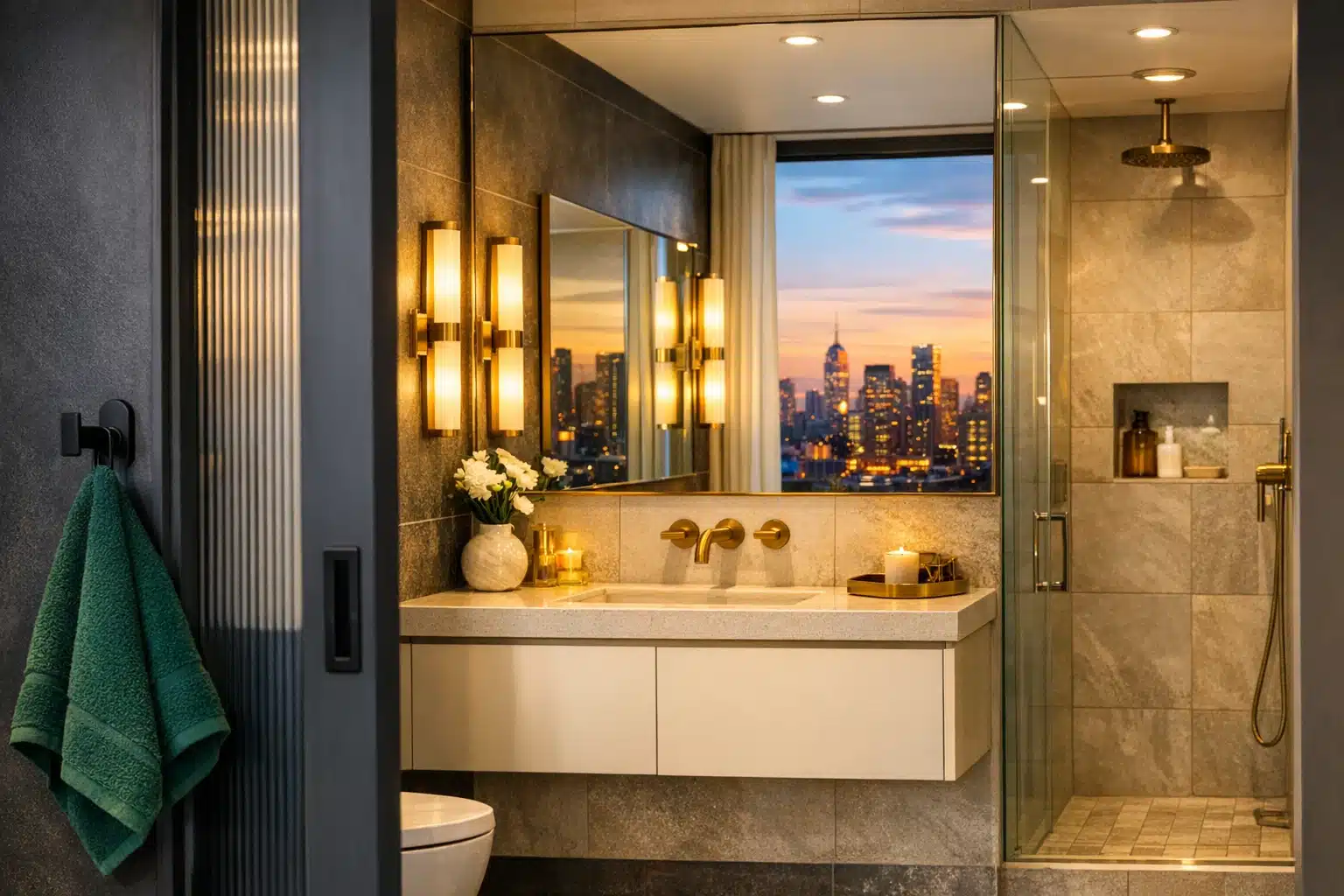
One of the biggest shifts in contemporary bathroom design is the move away from busy visual layering. Instead of several competing tile patterns, heavy trim details, and multiple metallic finishes, modern rooms tend to use fewer elements more deliberately. Large-format porcelain tiles, for instance, are popular because they reduce grout lines and create a quieter surface. Floating vanities are another common choice; by exposing more floor area, they help the room appear lighter and more open. Frameless shower glass continues that effect by keeping the eye moving through the space.
Color also shapes the mood. Pure white bathrooms still have their place, but newer modern schemes often lean into softer neutrals and earthy accents. Consider how these options change the atmosphere:
- Warm white and pale beige create a calm, spa-like softness.
- Greige and taupe add depth without making the room feel heavy.
- Charcoal, black, and walnut introduce drama when balanced with enough light.
- Muted greens or clay tones can make the space feel current without chasing trends too hard.
Material choice matters as much as color. Matte finishes generally feel quieter and more architectural, while polished surfaces bounce light and can brighten darker rooms. Porcelain is often preferred for floors and walls because it is durable, low maintenance, and available in looks that mimic stone, concrete, or wood. Natural stone offers undeniable character, but it usually asks for more care, including sealing and gentler cleaning habits. Quartz countertops are another practical modern favorite because they offer a refined appearance with consistent patterning and easier upkeep than some natural materials.
Modern inspiration also lives in the details: a slim wall-mounted faucet, a recessed niche aligned precisely with the tile grid, a round mirror softening a room full of straight lines. These moves are small, but together they create a space that feels deliberate. The best modern bathrooms do not shout. They hold back, let the materials speak, and leave enough empty space for the eye to rest. That is part of their appeal. In a busy home, visual calm is not just stylish; it is useful.
Small Bathroom Makeover Ideas That Make Every Inch Work Harder
A small bathroom makeover is really an exercise in editing. The goal is not to squeeze in everything seen on social media, but to make the room feel larger, clearer, and more capable than its footprint suggests. Small spaces reward discipline. Every item that projects too far, every dark corner left unlit, and every unnecessary visual break makes the room feel tighter. The good news is that even compact bathrooms can change dramatically without expanding a single wall.
One of the most effective strategies is to preserve floor visibility. When more floor can be seen at a glance, the room tends to read as larger. That is why wall-hung vanities, pedestal sinks in select layouts, and clear shower enclosures remain popular in smaller spaces. A bulky vanity with decorative legs might look charming in a showroom, but in a tight room, a streamlined cabinet usually performs better. A recessed medicine cabinet can also do quiet miracle work by adding storage without stealing depth from the walkway.
Storage is often the make-or-break issue in compact bathrooms. You do not need more stuff in the room; you need more intentional places for the things that truly belong there. Effective options include:
- Tall narrow cabinets that use vertical space instead of precious width.
- Built-in shower niches that replace clumsy hanging caddies.
- Drawer organizers that prevent a small vanity from becoming a chaotic box.
- Over-toilet shelving used sparingly, preferably in a simple design that does not crowd the wall.
Visual tricks help too, but only when they support function. A large mirror can expand the sense of space by reflecting light and extending sightlines. Light wall colors generally make compact rooms feel more open, though a deep color can work beautifully if the lighting is strong and the surfaces are simple. Consistent flooring from the main bathroom area into the shower can also stretch the room visually, especially when paired with a linear drain or low-threshold entry.
Fixture selection deserves close attention. A toilet with a slightly shorter projection can free up meaningful circulation space. A pocket door, where structurally feasible, removes the frustration of a swinging slab competing with the vanity or tub. Even towel placement matters. Hooks often work better than bars in very small bathrooms because they need less wall length and make quick use easier.
The smartest small bathroom makeover does not merely miniaturize a larger room. It responds to real habits. Maybe one person needs excellent makeup lighting, while another wants fast access to shaving tools or extra drawer space for children’s bath items. When design matches actual routines, the room stops feeling cramped and starts feeling clever. That shift is powerful. A tiny bathroom cannot become enormous, but it can become effortless, and that is often the better win.
Comparing Fixtures, Lighting, and Finishes for Style, Durability, and Maintenance
Once the layout is settled and the design direction is clear, the next challenge is choosing the parts that must perform every day. This is where bathroom design ideas either become practical or remain purely decorative. Faucets, tile, counters, mirrors, and lighting all contribute to the final look, but they also affect cleaning time, long-term durability, and how pleasant the room feels at seven in the morning. A well-composed bathroom is not just pretty under perfect lighting; it still works when steam fogs the mirror, water spots appear, and the room is used repeatedly by busy people.
Let us start with finishes. Chrome remains a reliable choice because it is widely available, usually more budget-friendly than specialty finishes, and easy to coordinate. Brushed nickel tends to feel softer and hides fingerprints a bit better. Matte black can look striking in modern bathrooms, but it may show mineral residue more quickly in areas with hard water. Brass, whether satin or aged, adds warmth and contrast, especially alongside wood tones or creamy neutrals. There is no universal winner; the best option depends on the room’s palette, maintenance tolerance, and the quality level of the product itself.
Lighting deserves even more respect than it usually gets. A single overhead fixture can make a bathroom usable, but layered lighting makes it pleasant. A practical setup often includes ambient ceiling light, task lighting near the mirror, and accent lighting if the room has niches or architectural features. Around the vanity, side-mounted sconces or well-positioned vertical fixtures often reduce facial shadows better than a lone light above the mirror. Many homeowners prefer bulbs in the 2700K to 3000K range for a warm, flattering feel, while some choose a slightly crisper 3500K for a cleaner, more neutral look.
Material comparisons also matter:
- Porcelain tile is durable, moisture-resistant, and available in many styles.
- Ceramic can be cost-effective, though performance varies by product and location.
- Natural stone offers one-of-a-kind character but typically needs more maintenance.
- Quartz counters are easy to care for, while marble brings elegance with higher upkeep.
Do not overlook ventilation. Moisture control protects paint, grout, cabinetry, and air quality. Many small bathrooms benefit from an exhaust fan rated at roughly 50 CFM or more, though room size and duct conditions matter. Quiet fans often cost more, but they are more likely to be used consistently. That makes them worth considering.
In the end, comparison is less about chasing luxury and more about matching performance to lifestyle. A family bathroom, a guest bath, and an en suite do not need identical solutions. The right selections are the ones that still make sense after the novelty wears off and the ordinary routine begins.
Conclusion: Turning Inspiration Into a Bathroom Makeover That Fits Real Life
If you are planning a bathroom update, the most useful mindset is to treat inspiration as a starting point, not a script. A saved image can show a mood, a material pairing, or a clever vanity idea, but it cannot tell you how your household moves through the room, how much storage you truly need, or whether a dramatic finish will feel practical after six months of daily use. The homeowners who end up happiest with a bathroom makeover are often the ones who ask simple, grounded questions early: What feels inconvenient right now? What must the room do better? Which features matter every day, and which ones are only attractive in pictures?
For many readers, especially those working on a small bathroom makeover, the best path is selective improvement. You do not always need a full gut renovation to create a meaningful difference. Replacing a bulky vanity, improving mirror lighting, refreshing tile, or switching to a cleaner color palette can dramatically change the experience of the space. Keeping existing plumbing locations may also free up budget for visible upgrades such as better fittings, a more durable countertop, or a custom storage solution that solves an actual problem.
A practical decision-making framework can help keep the project focused:
- Prioritize function first: layout, storage, ventilation, and lighting.
- Choose a consistent visual direction before buying individual products.
- Mix splurge items with steady, hard-wearing basics rather than overspending everywhere.
- Test samples at home, because store lighting rarely tells the whole truth.
- Plan for maintenance, not just installation day.
Modern bathroom inspiration works best when it is translated into choices that suit your home’s scale and your own habits. A serene palette, a floating vanity, or a frameless shower can be wonderful, but only if the room still feels comfortable, durable, and easy to maintain. That is the real standard of success.
For homeowners, renters improving within limits, or anyone simply daydreaming about a better start to the morning, the lesson is reassuring: good bathroom design is not reserved for large budgets or sprawling floor plans. It comes from clarity. Measure carefully, edit boldly, choose materials with both eyes open, and let every decision earn its place. When you do that, even a small bathroom can feel considered, modern, and surprisingly generous.