Easy Craft Ideas: Creative DIY Crafts for Adults
Crafting has become a welcome counterweight to screen-heavy routines, giving adults a chance to slow down and make something real with simple tools and modest budgets. Whether you want a useful home project, a personal gift, or a hobby that makes quiet hours feel richer, approachable crafts offer a flexible entry point. The strongest ideas do not ask for perfection; they reward curiosity, small experiments, and the satisfying moment when loose materials become something finished.
This article begins with a practical outline and then expands each topic in depth. It covers why simple crafts appeal to adults, how to choose materials and set up a workable space, which DIY projects are especially rewarding for beginners, how to make crafts that feel stylish and useful, and how to build a lasting habit without turning a pleasant hobby into another obligation.
- Why easy craft ideas fit adult schedules, budgets, and attention spans
- How to choose tools, materials, and a realistic workspace
- Creative DIY crafts you can complete in a single afternoon
- Craft ideas for adults who want gifts, decor, and practical results
- How to choose the right project and keep crafting over time
Why Easy Craft Ideas Matter for Adults
Easy craft ideas are more relevant than they may first appear. For many adults, free time is fragmented rather than abundant. A hobby that requires a dedicated studio, expensive tools, or months of training can feel unrealistic, even if it looks appealing from a distance. Simple crafts solve that problem by lowering the barrier to entry. A painted flower pot, a hand-poured candle, or a set of handmade gift tags can often be completed in 30 to 90 minutes, and many such projects begin with supplies that cost less than a casual meal out. That combination of affordability and speed matters because it helps people start before self-doubt has time to take over.
Another reason these projects work so well is that they offer visible progress. Many adult responsibilities involve long timelines and delayed results. A craft project is different. You cut, glue, paint, fold, tie, or mold, and the transformation happens in front of you. A plain jar becomes a lantern. Leftover paper becomes a collage card. Fabric scraps turn into a pouch. That immediate change creates a strong sense of momentum, which is one reason crafting remains popular across age groups and lifestyles.
Easy crafts also compare well with more passive leisure activities. Watching a show can help you unwind, but making something with your hands gives you a different kind of satisfaction: you end the hour with an object, a skill, or at least a lesson about what to try next. That does not mean crafts must replace other forms of rest. Instead, they add a tactile, grounded option to adult life. For people who spend most of the day typing, scrolling, or sitting in meetings, working with paper, thread, clay, or paint can feel refreshingly concrete.
A good beginner craft usually shares a few traits:
- Low startup cost, often around $10 to $40 for basic materials
- Forgiving techniques that still look attractive if the lines are imperfect
- Short completion times that make success feel reachable
- Useful or decorative outcomes, such as storage, gifts, or home accents
When adults say they want a creative hobby but do not know where to begin, easy craft ideas answer that uncertainty with a simple invitation: start small, make one thing, and let the next idea arrive from there.
Choosing Materials, Tools, and a Workspace That Actually Works
The most enjoyable craft setup is not necessarily the most elaborate one. In fact, adults are often better served by a compact, flexible system than by a dramatic collection of supplies that quickly becomes clutter. A useful starting point is to choose one or two material categories rather than trying everything at once. Paper crafts, fabric crafts, paint-based projects, and air-dry clay all offer different experiences, and each suits a different mood, budget, and space. Paper is inexpensive and forgiving, fabric adds texture and function, paint offers visual impact, and clay gives a sculptural quality that feels especially satisfying when shaped by hand.
Budget matters here, and it helps to think in ranges. A paper-based starter kit can often be assembled for $15 to $25 if you already own scissors. A paint-focused setup might run $20 to $50 depending on the number of colors and surfaces you buy. Fiber crafts such as macrame or embroidery can begin around $15, but high-quality cord, hoops, and specialty needles may raise the cost. None of these numbers are extreme, yet they show why it is smart to begin with a narrow focus instead of buying every appealing item at once.
A practical starter kit for many easy crafts includes:
- Sharp scissors and a craft knife for clean cutting
- A metal ruler and self-healing mat for measuring and protecting surfaces
- White glue, strong tacky glue, and double-sided tape for different materials
- Acrylic paints, two or three brushes, and a jar for water
- Sandpaper, clips, pencils, and scrap paper for testing ideas
Your workspace does not need to be a dedicated craft room. A kitchen table, a fold-out desk, or even a tray placed on a coffee table can be enough if you store tools well. Adults living in smaller apartments often do better with stackable bins, zip pouches, and project baskets that let them pause without losing momentum. If a hobby is difficult to set up and put away, it becomes easier to postpone. Convenience is not a minor detail; it is often the difference between crafting once and crafting regularly.
It is also worth comparing projects by mess level. Paper crafts and hand sewing are relatively tidy. Painting and decoupage need surface protection and drying time. Clay can be dusty if over-sanded. Candle making requires heat-safe tools and close attention. Matching the craft to your space prevents frustration before it starts. A well-chosen setup should feel inviting, not like a test of your storage skills. When your tools are easy to reach and your materials fit your room, creativity becomes less theatrical and more sustainable.
Creative DIY Crafts You Can Finish in an Afternoon
One of the smartest ways to explore creative DIY crafts is to start with projects that can be completed in a single session. Quick finishes build confidence, and they also help you discover what kind of making you genuinely enjoy. Some adults love repetitive detail, while others prefer bold, visible changes. An afternoon project acts like a low-risk experiment: the commitment is short, the material cost is manageable, and the result tells you whether to go deeper or switch directions.
A painted terracotta pot is a classic example because it is simple, affordable, and easy to personalize. Basic pots are inexpensive, acrylic paint dries fairly quickly, and the finished piece is both decorative and functional. Geometric patterns look modern, floral motifs feel softer, and solid color blocking can match almost any room. Compared with a more technical craft such as woodworking, this project delivers strong visual payoff with far less equipment. Most people can complete one or two pots in under an hour, not counting drying time.
Air-dry clay trays are another excellent option for adults who want a handmade object that looks polished. You roll the clay, shape it into a shallow dish, smooth the edges, let it dry, and then paint or seal it. These trays work well for keys, rings, earbuds, or desk items, which gives the project lasting utility. The main comparison here is between air-dry clay and oven-bake clay: air-dry is easier for beginners because it requires no baking, while oven-bake versions are often more durable. If convenience is your priority, air-dry clay wins.
Pressed botanical frames bring a calmer, almost poetic mood to crafting. You can use pressed leaves, flowers, or even herbs arranged between glass panels or mounted on cardstock. This craft is less about technical difficulty and more about composition. It suits adults who enjoy subtle color, natural materials, and decor that feels thoughtful rather than flashy. The materials are also flexible. Fresh clippings from a walk, flowers from a bouquet, or saved leaves from a garden all work. It is a reminder that creative projects do not always begin at the store.
If you want a project with a giftable finish, try a soy candle in a thrifted cup or jar. Candle making requires a little more attention because wax temperature and wick placement matter, but it still falls within beginner territory when you use a simple kit. A single candle often costs less to make than a boutique version from a home store, especially if you reuse containers. The scent can be customized, but even unscented candles can look elegant with the right vessel.
Other strong afternoon options include:
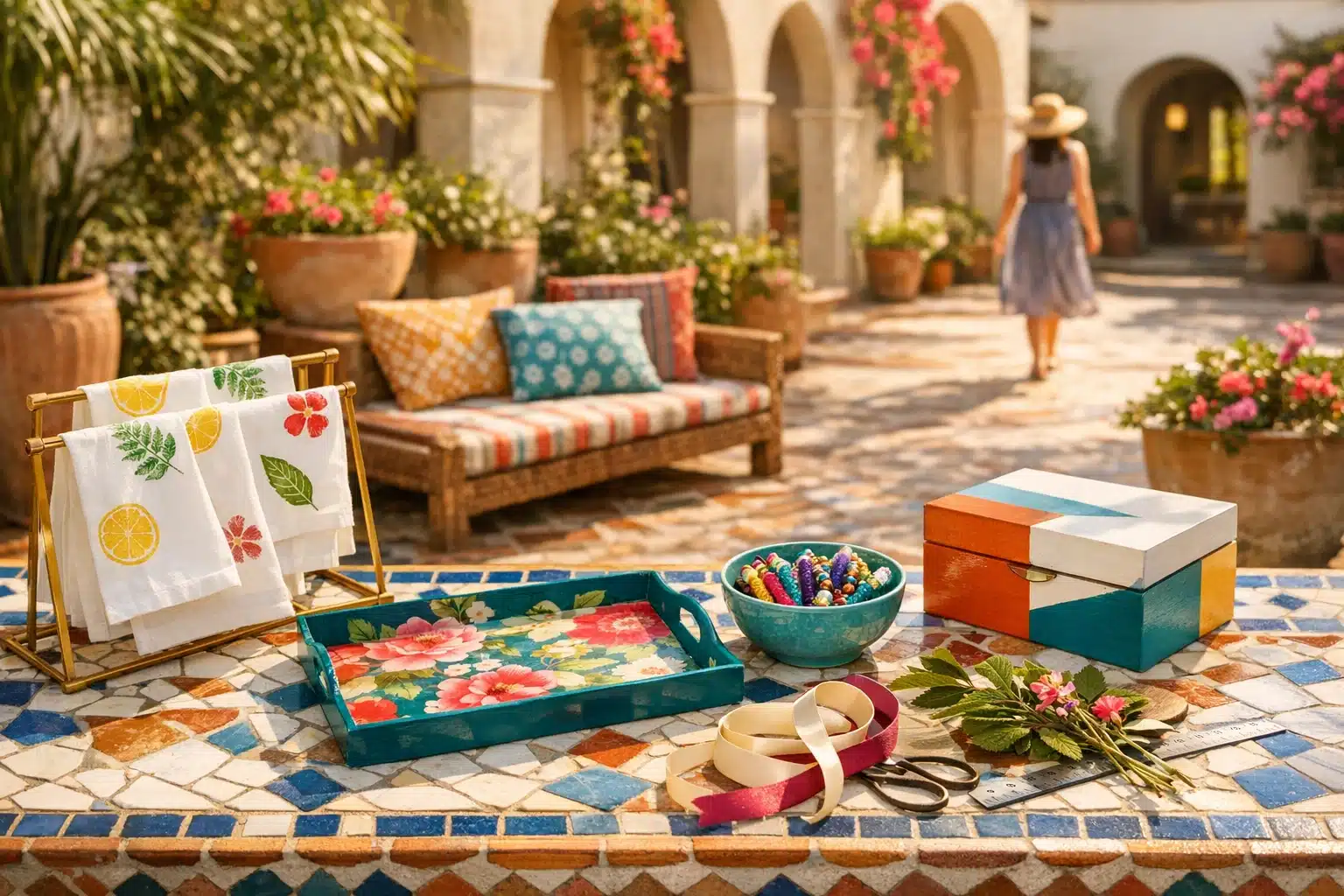
- Decoupage trays using decorative paper and sealant
- Hand-stamped tea towels with fabric paint
- Simple collage art made from magazines, maps, or packaging
- Beaded keychains or bookmarks for low-mess, portable crafting
The beauty of afternoon crafts is their pace. They do not loom over your calendar. They slip into it, add a little color, and leave behind proof that creativity does not have to wait for the perfect weekend.
Craft Ideas for Adults Who Want Stylish Decor and Meaningful Gifts
Many adults are drawn to crafts not just for the process, but for the chance to create items they can actually use. That practical angle matters. A project is often more motivating when you can imagine it on a shelf, on a desk, in a kitchen, or wrapped for someone you care about. Craft ideas for adults tend to work best when they balance expression with function. The result does not need to look store-bought, but it should feel intentional, durable, and suited to the person or space it is meant for.
Home decor is a natural place to begin. Handmade coasters, painted trays, framed textile swatches, and macrame plant hangers all offer visual interest without demanding large amounts of material. Compared with purely ornamental crafts, decor projects often justify their effort more clearly because they become part of daily life. A hand-painted storage box on an entry table or a custom wall hook board in a hallway earns its place every day. Even small upgrades can change how a room feels. A plain corner becomes warmer with a woven hanging; a simple shelf looks more personal when handmade vessels sit on it.
Gift crafts add another dimension: emotional value. A personalized recipe box, stamped bookmarks for a book-loving friend, or a candle blended with a scent someone actually likes can feel more thoughtful than a generic purchase. Handmade does not automatically mean better, of course. The advantage lies in relevance. A well-chosen craft reflects attention. It says, in a quiet way, that time was spent thinking about what would be useful or memorable. For many recipients, that detail matters more than perfection.
If you are making a craft as a gift, consider these questions before you start:
- Will the person use it regularly, display it, or store it away?
- Does the color palette match their taste rather than yours?
- Is the item sturdy enough to survive travel, wrapping, and handling?
- Would a simpler design make the gift feel more refined?
Upcycled crafts are especially strong in this category because they combine creativity with resourcefulness. Glass jars can become pantry storage, vases, or lanterns. Old frames can be repainted and filled with pressed botanicals or fabric art. Leftover wood can become small shelves or signs. These projects appeal to adults who want originality without unnecessary waste. They also show that style does not depend on high-end materials. Sometimes the most charming objects began as something overlooked.
A good adult craft project often carries a quiet confidence. It does not shout for attention. It fits into a home, supports a routine, or lands in someone’s hands with purpose. That blend of beauty and usefulness is one reason DIY remains so satisfying long after the glue dries.
Conclusion: How to Choose the Right Craft and Keep the Habit Enjoyable
If you are an adult looking for easy craft ideas, the most important decision is not which trend is currently popular. It is choosing a project that fits your real life. A beautiful tutorial means very little if it requires tools you do not own, a level of patience you do not currently have, or a workspace that turns your kitchen into a permanent mess. The right craft feels inviting from the start. It meets you where you are, whether that means a tight budget, limited storage, short evening windows, or a desire to make practical things instead of decorative ones.
A useful way to narrow your options is to ask a few direct questions. Do you want to work with color, texture, or structure? Would you rather finish something in under an hour, or are you happy to return to it over several days? Do you want a relaxing repetitive process such as stitching, or a faster, more visual transformation such as painting? These answers matter because adults do not all craft for the same reason. Some want calm. Some want a creative challenge. Some want affordable decor. Others simply miss making things by hand.
When building a lasting habit, it helps to keep expectations realistic:
- Start with one material family instead of collecting supplies for five hobbies at once
- Choose projects that match the time you truly have, not the time you wish you had
- Keep your tools visible or easy to access so starting feels effortless
- Save photos of finished work to track progress and refine your taste
- Allow uneven results, because skill grows through repetition rather than flawless first attempts
There is also value in paying attention to what you naturally return to. If you keep sketching ideas for handmade storage, perhaps functional decor is your lane. If you lose track of time arranging paper and color, collage or card making may be a better fit. A craft habit becomes sustainable when it is connected to pleasure, curiosity, and usefulness, not pressure. That is particularly true for adults whose schedules already contain enough obligations.
In the end, creative DIY crafts are less about producing a perfect object and more about reclaiming a little authorship over your time and surroundings. Start with one approachable idea, use what you have, and let the process teach you what comes next. For adults who want a hobby that is affordable, expressive, and refreshingly hands-on, easy crafts are not a small thing at all. They are a practical way to make ordinary hours feel more vivid, personal, and well spent.