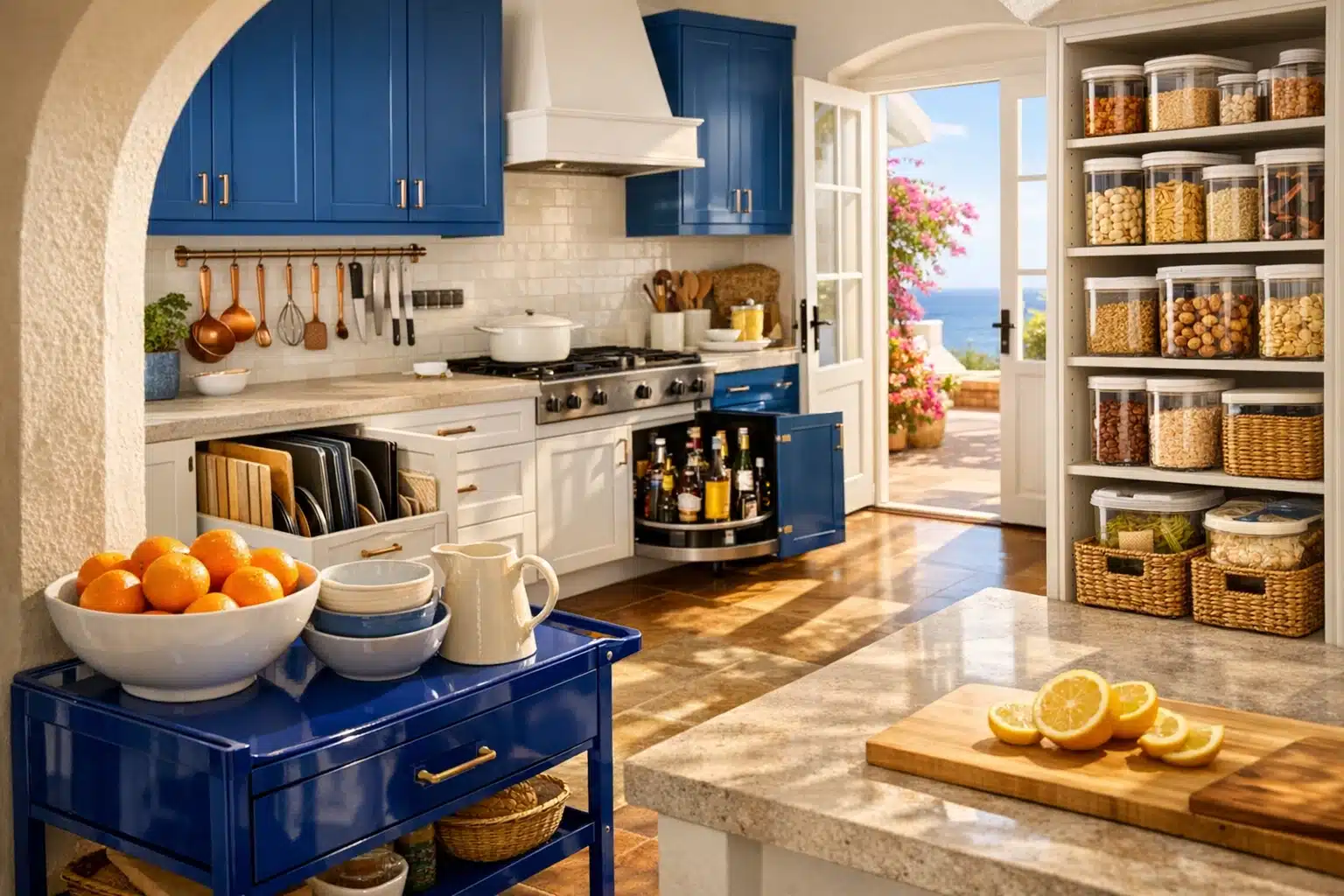
Kitchen Organization Ideas and Storage Solutions for a Smart Makeover
A well-organized kitchen saves more than time; it reduces daily friction, makes cooking calmer, and helps every shelf earn its keep. Whether you work with a compact apartment layout or a busy family kitchen, smart storage can turn cluttered corners into useful zones. This article explores practical organization ideas, flexible storage solutions, and makeover strategies that balance function, style, and budget. Start with the outline below, then move through five detailed sections designed to help you plan improvements with confidence.
Outline
- Section 1 explains how to assess your kitchen, declutter with purpose, and create work zones that match real cooking habits.
- Section 2 compares storage solutions for drawers, cabinets, pantries, corners, walls, and underused vertical space.
- Section 3 focuses on kitchen organization ideas for everyday routines, including food storage, cookware placement, labeling, and maintenance.
- Section 4 explores kitchen makeover ideas, from low-cost cosmetic changes to more involved updates that improve both appearance and function.
- Section 5 concludes with a practical roadmap for homeowners, renters, families, and small-space dwellers who want lasting results.
1. Start with a Kitchen Audit, Zoning Plan, and Clear Priorities
The best kitchen organization ideas rarely begin with containers, baskets, or matching jars. They begin with observation. Before buying a single organizer, spend a few days noticing how your kitchen actually behaves. Which drawer jams because utensils are tossed together? Which shelf swallows ingredients until they expire? Which counter becomes a landing strip for mail, chargers, and grocery bags? A chaotic kitchen often looks like a storage problem, but just as often it is a planning problem. Once you understand the pattern, the fix becomes more precise.
A practical audit starts with three questions: what do you use daily, what do you use occasionally, and what is simply taking up space. Remove everything from one category at a time, such as baking tools, food containers, or spices. Group like with like. This reveals duplicates, broken items, and tools that have quietly retired without announcing it. Many households discover they own far more storage products than they need, yet still struggle because the contents were never sorted well in the first place.
After the audit, create zones based on activity rather than object type alone. The classic kitchen work triangle, connecting sink, stove, and refrigerator, is still useful as a planning reference. Traditional guidelines often suggest a total triangle distance of roughly 13 to 26 feet, though modern kitchens do not need to follow it rigidly. More important is reducing unnecessary walking. Place prep knives, cutting boards, mixing bowls, and frequently used oils near your main prep area. Keep pots, pans, and cooking utensils near the stove. Store dish soap, towels, and trash access near the sink. When storage follows motion, the kitchen feels easier almost immediately.
It also helps to rank your goals. Some kitchens need better food storage because the pantry is inefficient. Others need visual calm because open surfaces feel crowded. Others need child-friendly access, aging-in-place adjustments, or rental-safe improvements. Defining the main issue keeps you from solving the wrong problem beautifully.
- Daily-use items should be between waist and shoulder height whenever possible.
- Rarely used appliances can move to higher shelves or adjacent storage.
- Duplicate tools should earn their place through frequent use, not optimism.
- Clear counters support safer prep and make the room feel larger.
Think of this step as drawing a map before building a road. It is not flashy, but it determines whether every later decision will feel smart or simply expensive. A kitchen makeover without an honest audit may look fresh in photos and still feel awkward at dinner time. Start with behavior, not decor, and the rest of the process becomes far more effective.
2. Kitchen Storage Solutions That Use Space More Efficiently
Once your zones are defined, storage solutions become easier to compare because you can match them to specific tasks. Good storage is not about stuffing more into the room; it is about making access faster, visibility better, and wasted space smaller. In most kitchens, the biggest missed opportunities are depth, height, and corners. Standard base cabinets are commonly about 24 inches deep, while upper cabinets are often around 12 inches deep. Those dimensions create hidden dead zones unless the storage system helps items move forward, stack well, or stay visible.
Drawers are often more efficient than deep shelves for many categories. A deep cabinet shelf tends to bury pans, lids, and containers in a layered pile that requires excavation. Deep drawers or pull-out shelves solve that by bringing the contents to you. For cookware, vertical dividers are especially effective because they allow pans, baking sheets, and cutting boards to stand upright rather than collapsing into a metallic avalanche. Pull-out trash and recycling bins can also free floor space and improve traffic flow around the prep area.
Pantries benefit from a mix of clear bins, risers, and labels, but each tool has a different job. Clear bins group small items, such as sauce packets or baking extras, and prevent shelves from becoming loose collections of half-used packages. Tiered risers work well for canned goods and spice jars because they improve visibility in depth. Labels are useful, but they are most effective when paired with consistent categories. A label that says “snacks” is only helpful if snacks are not also hiding in three other cabinets.
Wall storage deserves more attention than it gets. In small kitchens, vertical space can function like an extra cabinet. Magnetic knife strips, rail systems with hooks, narrow floating shelves, and pegboards can hold frequently used tools without stealing drawer room. The key is restraint. Wall storage works best for items used often enough to justify display and tidy enough not to create visual noise.
Some of the most useful solutions are simple and inexpensive:
- Lazy Susans help corners and deep pantry shelves stay reachable.
- Drawer organizers stop utensils from drifting into mixed piles.
- Under-shelf baskets add a second layer inside tall cabinets.
- Turntables make oils, vinegars, and condiments easier to access.
- Clear food containers can improve stackability and reduce packaging clutter.
There are also important trade-offs. Open shelving looks airy but exposes dust, grease, and mismatched packaging. Closed cabinetry hides clutter better but can waste depth if shelves are not customized. Floor-to-ceiling storage adds capacity but may require a step stool and discipline. No system is automatically better; the right choice depends on whether you prioritize speed, aesthetics, visibility, or low maintenance. The smartest kitchens use a blend of methods, with closed storage for bulk and visual calm, and open or highly accessible storage for daily essentials.
3. Everyday Kitchen Organization Ideas for Food, Tools, and Routines
If storage is the skeleton of a kitchen, routine is the muscle. Even a beautifully planned space loses its edge when items drift back into random places. The most effective kitchen organization ideas support daily habits rather than fighting them. That means putting things where they are naturally used, minimizing decisions, and creating systems that are easy to reset after a busy day.
Start with food. Group pantry items by how people actually cook and snack, not by what looks neat on social media. For example, a breakfast zone might hold oats, cereal, bread, nut butter, and mugs. A baking zone can include flour, sugar, measuring cups, parchment paper, and mixing tools. A school-lunch or quick-meal zone can save a surprising amount of time on hectic mornings. Organizing by function makes it easier for everyone in the household to find what they need without asking for a guided tour.
Refrigerator organization matters just as much. Store ready-to-eat items at eye level, raw ingredients in appropriate cold zones, and leftovers where they will be seen before they become mysterious science projects. Clear bins help, but rotation matters more. A simple first-in, first-out approach can reduce waste by keeping older items visible. If your household routinely buys produce with good intentions and poor follow-through, place fruits and vegetables where you see them first instead of burying them behind condiments.
Tools deserve similar logic. Keep prep tools close to your main counter, cooking tools near heat, and serving items near the dining path. A junk drawer is not automatically a failure; sometimes it is just an unedited category. If you want one, give it boundaries with dividers and a limited purpose. A kitchen without rules can feel lively for a week and exhausting for a year.
Try building a few routine-friendly systems:
- Create a landing spot for keys, mail, or reusable bags outside the main prep zone.
- Assign one drawer to food storage containers and another to lids, or use a lid rack inside one drawer.
- Keep a donation box nearby while organizing so unused items leave the house quickly.
- Use short labels that anyone can understand at a glance.
- Schedule a ten-minute weekly reset for counters, pantry checks, and fridge leftovers.
There is also an emotional side to kitchen organization. The room often serves as workshop, meeting point, snack station, and late-night refuge. A thoughtful system lowers friction for everyone, not just the person doing most of the cooking. The goal is not showroom perfection. It is a kitchen where opening a drawer feels predictable, putting groceries away feels manageable, and cooking dinner does not begin with an archaeological dig through plastic lids and expired spices.
4. Kitchen Makeover Ideas That Improve Function and Style
A kitchen makeover does not have to begin with demolition. In many homes, the most satisfying upgrades come from changes that improve both appearance and usability at the same time. Paint, lighting, hardware, shelving, surfaces, and layout adjustments can all shift the mood of the room. The trick is to distinguish cosmetic fatigue from functional failure. If the kitchen works fairly well but looks dated, a visual refresh may be enough. If workflow is poor, style changes alone will not solve the irritation beneath the surface.
One of the most effective low-to-mid-cost updates is cabinet improvement. Repainting cabinets can dramatically change the room, especially when paired with new pulls or knobs. Refacing, where the outer cabinet surfaces and doors are replaced while the cabinet boxes remain, usually costs more than paint but less than full replacement. Full replacement offers the most design freedom, yet it only makes sense when the existing layout or cabinet quality truly limits performance. The same logic applies to countertops and backsplashes: if the surface is functional but visually tired, a targeted update may deliver better value than a complete overhaul.
Lighting is another makeover tool that does more than decorate. Layered lighting makes the kitchen easier to use and more pleasant to spend time in. Many kitchens rely too heavily on one central fixture, which creates shadows at the counter. Adding under-cabinet lighting can improve visibility for chopping, reading recipes, and cleaning. Pendant lights over an island or peninsula can define a focal point, while warm bulbs can make the room feel more welcoming without changing a single cabinet.
For smaller kitchens, consider changes that stretch visual space. Lighter cabinet colors, reflective backsplashes, glass-front uppers used sparingly, and fewer items on display can make the room feel less compressed. Open shelving can work in moderation, especially for attractive everyday dishes, but it demands discipline. Closed storage remains the better choice for households that prioritize low-maintenance tidiness.
Useful makeover ideas include:
- Replacing a bulky microwave placement with a shelf, drawer unit, or better integrated location.
- Adding a slim rolling cart for extra prep space in tight layouts.
- Installing a peg rail or small shelf near the cooking zone for frequently used tools.
- Swapping a dark wall color for a lighter tone to brighten the room.
- Upgrading faucet hardware if cleaning workflow is a regular frustration.
Perhaps the most important makeover principle is sequence. Organize first, then measure storage needs, then improve finishes. Otherwise, you may redesign around clutter instead of around how the kitchen should function. A beautiful kitchen should not just photograph well at noon; it should still feel good at 7 p.m., when the pan is hot, the dishwasher is half open, and someone is asking where the colander went.
5. Conclusion: How to Choose the Right Changes for Your Kitchen and Lifestyle
The most successful kitchen organization and makeover projects are not built on trends alone. They are built on fit. A renter in a compact apartment, a family managing lunch boxes and weeknight dinners, and a frequent home cook with specialty equipment all need different answers. That is why the smartest approach is to combine honest assessment, targeted storage, and realistic design choices rather than chasing a one-size-fits-all result.
If you are working with a small kitchen, focus first on vertical storage, clear zoning, and reducing counter clutter. Wall rails, shelf risers, narrow carts, and disciplined categories can create meaningful gains without construction. If your kitchen is larger but still feels inefficient, the issue may be placement rather than capacity. Reassigning cabinets, adding pull-outs, or improving pantry organization can save more time than buying new finishes. If your kitchen looks dated yet functions reasonably well, cosmetic upgrades such as paint, hardware, lighting, and a refreshed backsplash may offer the best balance of impact and cost.
For busy households, the most valuable systems are usually the ones that survive ordinary life. That means labels that everyone understands, snack zones children can reach safely, prep tools near the main work area, and simple weekly resets instead of heroic monthly overhauls. A system is only useful if it still works when the groceries arrive late, dinner is rushed, and someone puts the scissors back in the wrong drawer. Good organization is forgiving as well as tidy.
As a final roadmap, consider this order of action:
- Declutter before purchasing storage products.
- Build zones around real habits and traffic flow.
- Choose storage tools that improve access, not just appearance.
- Address lighting and visibility early in any makeover.
- Invest more heavily only after you understand what the kitchen truly lacks.
In the end, a smart kitchen makeover is less about perfection and more about relief. It is the relief of finding the right pan quickly, seeing what food you already have, clearing a counter in seconds, and enjoying a room that supports daily life instead of slowing it down. For readers planning their next steps, the best starting point is usually small but deliberate: one drawer, one cabinet, one zone. Improve that well, learn what works, and let the kitchen evolve into a space that is easier to use, easier to maintain, and more enjoyable to live with every day.