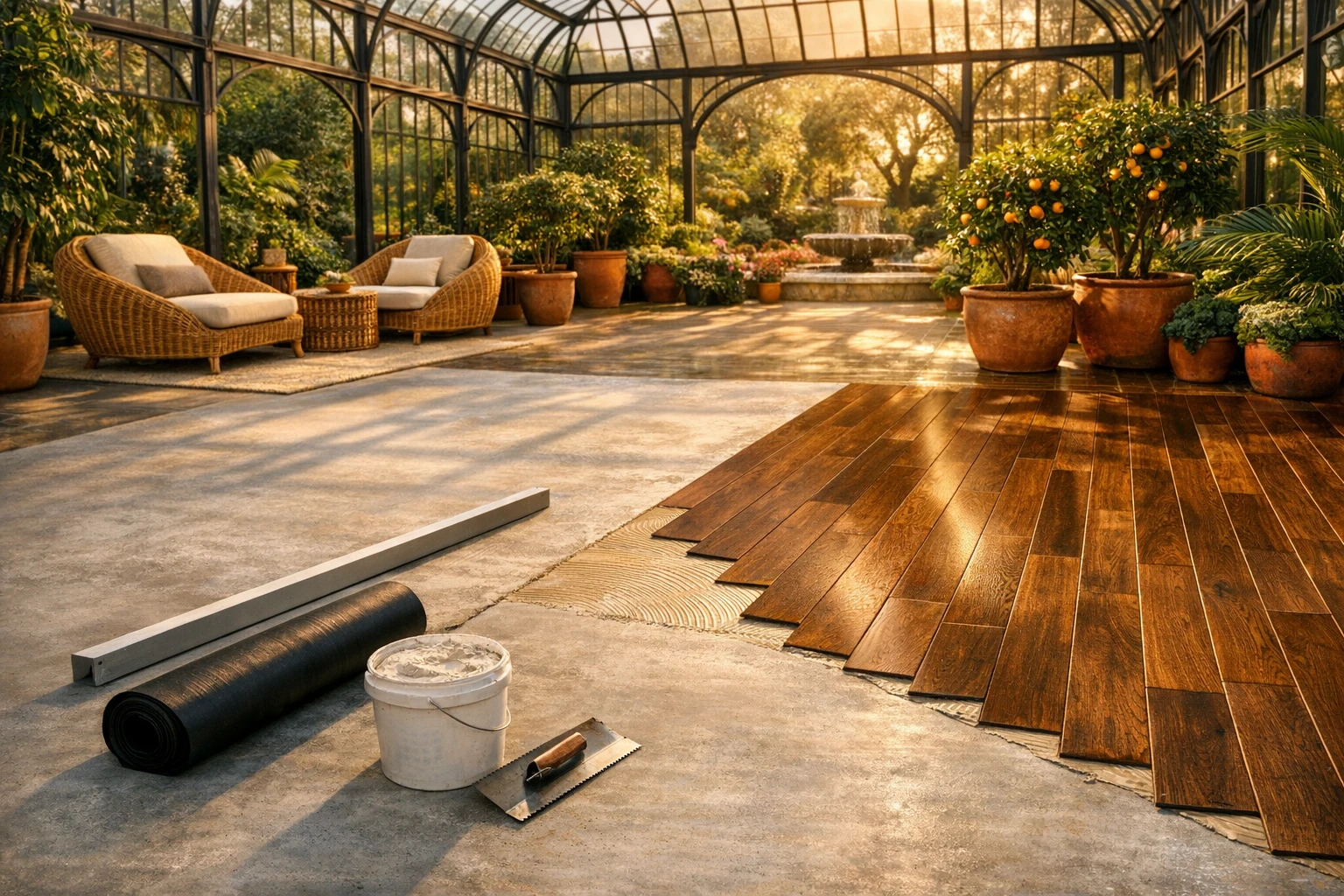
Hardwood Floor Installation: How to Install New Flooring
Planning a Floor Installation Project the Right Way
Floor installation is one of those projects that changes a home from the ground up, both visually and practically. A new surface can make rooms feel brighter, quieter, warmer, and easier to maintain, but only when the planning and installation are handled with care. Hardwood floor installation, in particular, rewards precision because small mistakes in layout, moisture control, or fastening can turn into squeaks, gaps, and expensive repairs. Understanding the full process before the first board is cut helps homeowners make smarter decisions and avoid frustration.
A floor is the stage every chair, table, rug, and footstep performs on, so the decision deserves more thought than simply picking a sample under bright store lights. Before you install new flooring, define the job in practical terms. Which room is being updated? How much moisture does it see? Will pets, children, rolling chairs, or heavy furniture use the space every day? A quiet bedroom may handle a different surface than a busy kitchen or a basement that occasionally feels damp after a storm. Budget matters too, but the cheapest material is not always the least expensive over time if it wears quickly or fails early.
It helps to compare the main flooring categories before settling on hardwood. Solid hardwood offers real wood thickness, can often be refinished multiple times, and adds a classic appearance that many buyers value. Engineered hardwood gives you a real wood top layer with improved dimensional stability, which can be useful in spaces where humidity changes seasonally. Laminate resists scratches well and can be budget friendly, while luxury vinyl plank handles water better than traditional wood products. Tile is extremely durable and moisture resistant, but it feels harder and colder underfoot. Each option has strengths, and the best choice depends on lifestyle, not just trend.
Here is a simple outline for the project and for this article: • Choose the flooring type based on room use, budget, and maintenance expectations. • Inspect and prepare the subfloor so the new surface has a sound base. • Match the installation method to the product, whether floating, glued, or nailed. • Follow hardwood specific rules for acclimation, layout, fastening, and finishing. • Review costs, common mistakes, and long term care before making the final call.
That outline may look straightforward, yet every line hides decisions that affect appearance and lifespan. Measuring accurately, ordering the right amount of material, allowing for waste, and checking manufacturer instructions are not glamorous tasks, but they are what separate a satisfying project from a rushed one. In many homes, adding 5 to 10 percent extra material for cuts and defects is standard practice, with more waste needed for diagonal layouts or rooms with many angles. Good planning does not make the work flashy, but it makes the result believable, durable, and worth living with every day.
Preparing the Room, Subfloor, and Materials Before Installation
If the finish floor gets the applause, the subfloor does the hard backstage work. Many flooring problems that appear months after installation begin with poor preparation on day one. Gaps, hollow spots, uneven seams, cracked tiles, and squeaks often trace back to a base that was dirty, wet, weak, or out of level. That is why professionals spend significant time on removal, inspection, and correction before the first plank goes down.
Start with measurement and demolition. Measure length and width carefully, note closets and alcoves, and calculate square footage. Then remove furniture, doors if necessary, base shoe or quarter round, and the existing floor when required. Some products can be installed over old surfaces, but that depends on manufacturer rules and the condition of what is already there. A floor with trapped moisture, loose tiles, or soft underlayment can compromise the new material even if it looks harmless at first glance.
Next, check the subfloor for flatness and moisture. Many flooring manufacturers specify a flatness tolerance such as no more than about 3/16 inch variation over 10 feet, though exact numbers vary by product. Use a long straightedge or level to find low spots and high spots. Sand or grind high areas and fill low ones with approved patching compounds. On concrete, moisture testing is especially important because slabs can release vapor long after they look dry. On wood subfloors, a moisture meter helps confirm conditions are within the product's acceptable range. With hardwood, the difference between flooring moisture content and subfloor moisture should typically remain within the limits listed by the manufacturer.
Acclimation is another step people rush, often because the boxes are already sitting in the room and optimism starts whispering, close enough. Resist that whisper. Some solid hardwood products need several days to adjust to interior conditions, while certain engineered or rigid core products have shorter acclimation requirements or none at all. The safe move is to follow the specific product instructions, maintain normal living conditions in the home, and verify temperature and relative humidity before starting. Many wood flooring makers recommend indoor humidity roughly in the 30 to 50 percent range.
Useful preparation items usually include: • Tape measure, chalk line, spacers, straightedge, and moisture meter. • Pry bar, saws, tapping block, pull bar, and safety glasses. • Underlayment or moisture barrier where required. • Patch compound, fasteners, adhesive, and transition pieces matched to the flooring system.
Finally, think ahead to details people notice later. Will doors clear the new floor height? Do cabinets, appliances, and trim need special treatment? Are transitions to tile or carpet planned in advance? Preparation is less exciting than snapping finished photos, but it is where a lasting floor quietly earns its future.
How to Install New Flooring Methods, Sequence, and Practical Comparisons
Once the room is prepared, the actual installation becomes a matter of method and discipline. Different products go down in different ways, and the method is not just a technical footnote. It affects speed, cost, feel underfoot, repair options, and tolerance for moisture or movement. In broad terms, most modern floors are installed as floating systems, glue down systems, or nail or staple down systems. Knowing the differences helps you match the process to the material rather than forcing the material into the wrong process.
A floating floor is common with laminate, many luxury vinyl planks, and some engineered wood products. The planks lock together and rest over an underlayment rather than being attached directly to the subfloor. This method can be fast and approachable for capable DIY homeowners, especially in rectangular rooms. It also allows some movement, which is why expansion gaps around walls, columns, and fixed objects are essential. If those gaps are skipped, the floor may buckle or separate as seasons change.
Glue down installation is frequently used for certain engineered woods, vinyl products, and tile related systems. The main advantage is a firm, solid feel and, in many cases, strong performance over concrete slabs. The challenge is that adhesive work is less forgiving. Trowel size, open time, room temperature, and cleanup all matter. Too much adhesive can ooze between seams, while too little can reduce bond strength. A good glue down job feels calm and deliberate, almost like painting with gravity as a silent partner.
Nail down or staple down installation is the traditional approach for many solid hardwood floors over wood subfloors. It creates a secure mechanical connection and a classic wood floor feel, but it requires the right tools, subfloor thickness, and fastening pattern. Boards usually begin along a straight reference wall, with the first rows face nailed or carefully blind nailed until the flooring nailer can be used. End joints are staggered for strength and appearance, and rows are checked often so minor drift does not become a crooked room-wide problem.
A practical installation sequence often looks like this: • Establish a straight starting line and dry lay several rows to confirm the layout. • Mix boards from multiple boxes to distribute color and grain variation naturally. • Maintain expansion space at walls and fixed vertical surfaces. • Cut around vents, jambs, and doorways carefully rather than forcing pieces into place. • Finish with transitions, trim, and a final inspection for lippage, gaps, and damaged boards.
Choosing the right method depends on context. Floating floors suit speed and convenience. Glue down systems can excel over concrete. Nail down methods remain a strong choice for solid hardwood in the right structure. Install new flooring with the method the product was designed for, and the job becomes more predictable, more durable, and much easier to defend years later when real life starts testing it.
Hardwood Floor Installation Step by Step With Solid and Engineered Options
Hardwood floor installation deserves special attention because wood is beautiful, durable, and surprisingly sensitive. It is a natural material, which means it responds to humidity, temperature, and the structure beneath it. That sensitivity is not a flaw; it is part of what gives wood character. The grain, color shifts, and texture make a room feel grounded in a way printed surfaces often cannot. Still, beauty does not excuse carelessness, and hardwood punishes shortcuts with a memory that lasts for years.
The first decision is choosing between solid and engineered hardwood. Solid hardwood is made from one piece of wood and is commonly about 3/4 inch thick. It can often be sanded and refinished multiple times, which is a major long term advantage. However, it is more sensitive to moisture changes and is usually best suited to above grade areas over wood subfloors. Engineered hardwood has a real wood wear layer over a layered core. It generally offers better dimensional stability, so it is often preferred over concrete slabs or in homes with seasonal humidity swings. The tradeoff is that the number of future refinishes depends on the thickness of the top layer.
Installation begins with environmental control. Run heating or cooling systems normally, bring the house to lived in conditions, and verify that the flooring has acclimated according to the manufacturer. Next, decide the board direction. In many traditional layouts, boards run parallel to the longest sightline of the room, and for some solid hardwood installations over wood subfloors, installers often prefer a direction perpendicular to joists for added stiffness. The exact choice depends on structure, aesthetics, and product requirements.
Then comes layout, where craftsmanship quietly takes center stage. Open several cartons and rack the boards across the floor before fastening them. This spreads out lighter and darker pieces and prevents one cluster of short boards from drawing the eye. Avoid H patterns where end joints align too predictably. Many manufacturers call for staggered end joints of at least several inches, often 6 inches or more. Leave expansion space at the perimeter, typically around 1/4 to 1/2 inch depending on the product and room size.
For nail down solid hardwood, the first rows may be face nailed and then blind nailed as the installer gains space for a flooring nailer. Fastener spacing varies by product, but it is commonly every 8 to 10 inches with fasteners set a short distance from board ends. Engineered hardwood may be floated, glued, or nailed depending on the product. Prefinished boards shorten project time because sanding and site finishing are not required. Unfinished hardwood offers seamless customization and a uniform finish, but it adds sanding time, dust control needs, curing time, and scheduling complexity.
Hardwood rewards patience at the end as much as at the beginning. Protect the surface during finishing work, use felt pads under furniture, and maintain indoor humidity consistently. A well installed wood floor does not just cover a room. It settles into the home like a long term resident, steady, useful, and quietly impressive.
Costs, Common Mistakes, and Final Advice for Homeowners
Flooring decisions eventually reach the same crossroads: what will it cost now, what might it cost later, and how much risk is tied to the installation itself. Material prices vary by region, brand, and grade, but broad market ranges are still useful for planning. Laminate may start around 1 to 5 dollars per square foot for material, luxury vinyl plank often lands around 2 to 7 dollars or more, engineered hardwood frequently runs about 4 to 12 dollars or higher, and solid hardwood commonly starts near 5 dollars and can climb well beyond 15 dollars per square foot for premium species and widths. Labor adds another layer, often several dollars per square foot, with stairs, furniture moving, trim work, subfloor correction, and tear out increasing the final number.
The bigger financial issue is not always the initial invoice. It is the cost of preventable mistakes. An inexpensive product installed over a damp slab can fail faster than a premium floor placed over a well prepared base. Likewise, a beautiful hardwood floor installed without proper acclimation may cup, gap, or squeak, leaving the homeowner with a room that looks expensive and sounds argumentative.
Some of the most common errors include: • Ordering too little material and ending up with a mismatched second batch. • Skipping moisture testing because the subfloor seems dry to the touch. • Ignoring flatness requirements and hoping the planks will somehow hide the problem. • Forgetting expansion gaps at walls and fixed objects. • Using the wrong underlayment, adhesive, or fasteners for the product. • Rushing the last rows, transitions, and trim because the project feels nearly finished.
Maintenance should also influence the buying decision. Hardwood looks excellent for decades when owners sweep grit regularly, clean with manufacturer approved products, wipe spills promptly, and use rugs in high traffic zones. It does not love standing water, harsh steam treatment, or extremely dry winter air. Vinyl and laminate can be easier in busy households, but even those materials benefit from protective pads and routine cleaning. In other words, installation is the opening chapter, not the entire story.
For homeowners trying to decide whether to DIY or hire a professional, the honest answer depends on the room, the product, and your tolerance for precision work. A simple click lock floor in a square bedroom may be a reasonable weekend project. Large open spaces, uneven subfloors, glued systems, stairs, and hardwood nail down jobs usually demand more experience and better tools. If resale value, long term durability, and a polished finish matter most, professional installation can be money well spent.
Final summary for the target reader: if you want to install new flooring successfully, start with the room, not the sample board. Choose a material that suits moisture levels, traffic, and maintenance habits, then prepare the subfloor with the seriousness it deserves. When hardwood is the goal, pay close attention to acclimation, layout, fastening, and indoor climate control. A floor that is planned carefully and installed correctly will not need to beg for attention later; it will simply do its job beautifully, every single day.